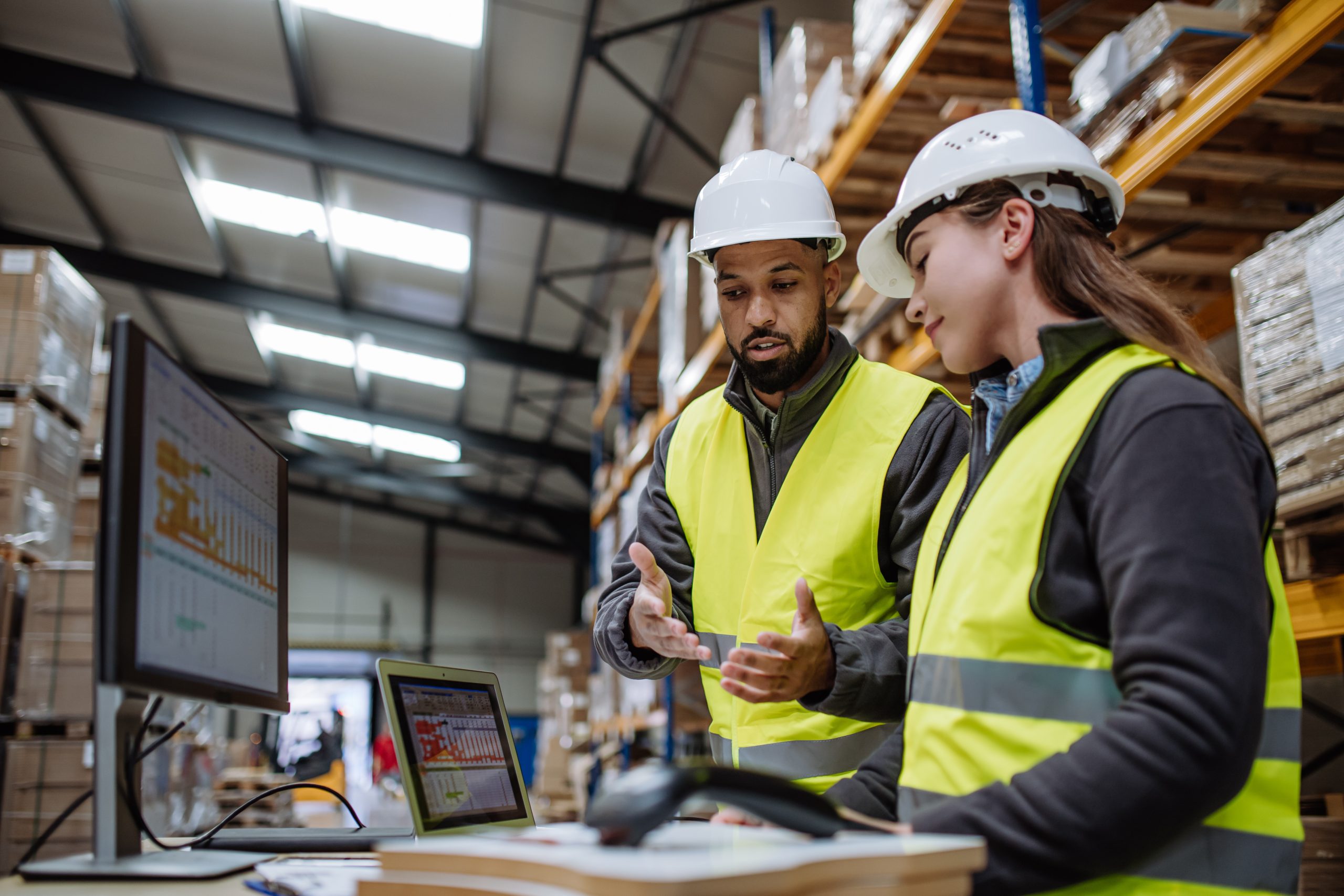
Concepts & Design Studio, which sells contemporary furniture and accessories imported from 10 suppliers in Spain and China, uses WTDC in Miami to handle trade logistics — all the steps required to move its goods from the manufacturers’ shipping bays in Europe and Asia to Concept & Design’s trucks for delivery to customers.
“WTDC arranges the overseas freight, containers, customs documents, inland freight and storage for our products,” said Tim Broderick, who co-owns the Miami-based Concepts & Design Studio with interior designer Julissa De Los Santos. “I don’t know all the details of exporting and importing furniture and it would take tremendous resources for me to learn,” noted Broderick, whose business sells furniture through its Modern Home 2 Go store and provides design services.
“I don’t have to invest in forklifts and containers and other equipment, so I can concentrate on finding the right products for our company. They take care of all the other details. It’s a one-stop shop for me.”
Trade logistics companies in South Florida like WTDC act as intermediaries managing the myriad details associated with every link in the supply chain for their customers.
Dealing with companies all over the world, they facilitate the flow of goods from one point to another, navigating through export and import regulations, arranging proper documentation and transportation, providing storage when necessary and keeping sender and receiver informed of the progress of their shipments.
Depending on their scope of services, logistics companies can also offer inventory control, consolidate shipments, pack, crate and assemble goods and distribute merchandise in the United States and overseas.
Trade logistics is big business in Miami-Dade County, driven by tens of billions of dollars in imports and exports, especially exports to Latin America. And Congress’ recent passage of free-trade agreements with Colombia, South Korea and Panama are expected to significantly expand international commerce and create many new jobs in the Miami Customs District and other parts of the United States.
Industry sources estimate that there are around 600 licensed logistics companies in the county, plus hundreds more that supply services such as insurance, transportation, loading and unloading of merchandise and others.
“Trade logistics is extraordinarily important for this community,” said Jerry Haar, professor and associate dean of the College of Business Administration at Florida International University and an expert in international commerce.
“International trade is one of the key pillars of the South Florida economy and it takes on so many different dimensions — Miami’s international airport, the seaport, and all the services that surround them, like transportation, storage, hardware and software,” said Haar, who also directs FIU’s Pino Global Entrepreneurship Center. “Our trade logistics system creates jobs and gives us a competitive advantage.”
The Miami Customs District, which stretches from Palm Beach County to the Florida Keys, has been one of the stronger international trade performers nationwide and trade has been growing steadily in 2010 and 2011, said Ken Roberts, president of Miami-based WorldCity, which tracks and analyzes international commerce across the United States.
“We ship more cellular phones, computers, computer parts, printers and cameras than any other customs district in the U.S. because we supply Latin America — and they’ve been doing well,” he added. This all means more business for logistics companies.
“We’re sort of the shopping center for Latin America.”
Outside of Venezuela, there are few weak spots in the region, Roberts noted. Brazil, always a leading trade partner for Miami, has grown in importance and generated more business for many local logistics companies, especially with the soccer World Cup coming to the country in 2014 and the Summer Olympics in 2016, he said.
Trade logistics may have become a more familiar concept to the general public, thanks to a recent UPS television advertisement touting the company’s expertise in supply-chain management. UPS took That’s Amore, a love song made famous decades ago by Dean Martin, and converted it into a jingle titled That’s Logistics.
UPS, FedEx and DHL, giant companies that started out as messenger or courier services, expanded into trade logistics as they saw increasing growth and business opportunities in international commerce. All three offer logistics services for customers engaged in South Florida’s robust trade with Latin America.
Miami-based Ryder System, which began as a truck leasing business, also entered supply-chain management in a big way.
Large foreign-based logistics companies, like Germany’s Hellmann Worldwide Logistics and India’s Panalpina, have substantial operations in Miami.
But many Miami-based logistics companies are small, family-owned enterprises. Here are a few examples:
WTDC
Founded 35 years ago, WTDC (which formerly meant World Terminal and Distributing Corp.) is owned by the Gazitua family, originally from Chile.
The Miami company, which offers supply-chain management services to customers like Concepts & Design Studio, recently obtained a car dealership license so it could directly buy and export cars.
“We’re shipping about $1 million a month in vehicles, mostly new,” said Gary Goldfarb, WTDC’s executive vice president. “We had Brazilian customers who asked us to do this.”
WTDC’s business was up 20 to 30 percent in the first half of 2011, Goldfarb said, and 2010 showed a 40 percent improvement over 2009. “Business in general is stronger and it’s growing every month,” he added. “About 50 percent of our business now is related to Brazil, and growing. It wasn’t like this before.”
The company added four employees last year and now has a total of 19. WTDC also has between three and five interns and hires temporary workers. The head count had fallen to around 12 during the worst of the recession.
Most of the company’s business is related to Latin America: Merchandise and equipment comes from Europe and Asia for Latin America and goods arrive from Latin America for markets in the United States, Goldfarb said.
Maintaining inventory at WTDC’s warehouses is an important part of the business. Companies store liquor, mechanical parts, heavy equipment and building materials with WTDC until a customer in Latin America places an order. A European equipment manufacturer, for example, can get its order to a Latin American customer more quickly if it’s shipped from Miami, rather than sending it across the Atlantic.
The company has a cold-storage facility for perishables, a standard warehouse and a bonded warehouse, where imports can be stored duty free until they are reshipped.
A new source of business for WTDC is managing inventories in Brazil. For example, WTDC moves furniture from U.S. and European manufacturers to a “dry port” (like a free-trade zone) in Brazil, where merchandise can be stored without paying customs duties.
When WTDC’s customer wants to deliver small or large volumes of merchandise to retailers, the furniture is assembled and shipped to a retailer. “Our customers prefer that we control inventories for them since it allows them to compete more favorably,” Goldfarb said.
Despite competition from other U.S. ports, Miami remains the most viable trade center for Latin America.
“Other ports went after our business, but Miami seems to have prevailed,” Goldfarb noted. “We don’t seem to be losing business to other markets.”
ROBERTSON FORWARDING
Miami-based Robertson Forwarding Co. handles shipments of aircraft parts and military equipment for U.S. embassies and military contractors in Latin America and other regions.
“Our biggest segments are aircraft parts and computer and military equipment,” said Jennifer Robertson-Ahrens, the company’s treasurer and daughter of Joan Robertson, who co-founded the company with her late husband, Al, in New York in 1968.
The Robertsons moved their business to Miami in 1992 when they saw the potential for growth in international trade here.
“Aircraft parts come to us in Miami from companies like Bell Helicopter and Lockheed Martin and we use commercial aircraft to ship them out,” Joan Robertson said. “We have to turn around shipments as quickly as possible to keep aircraft in service,” she added. Robertson Forwarding, which has relationships with agents worldwide, also uses ocean carriers for non-urgent shipments.
South America is its largest market, especially Colombia, but Robertson also sends shipments to the Middle East and Africa. “We are looking at developing new business in Brazil,” Robertson-Ahrens said.
“Our survival tactic was to become niche-oriented,” Robertson-Ahrens said. “We have contracts with the U.S. State Department and other government agencies and we handle their projects.” But these contracts take time to develop, “and sometimes you don’t know exactly when they will come along.”
The family-owned business currently has 10 employees, down from 15 before the recession. “Our focus for the last three years has been on training, to make sure everyone on our team can fully discuss projects with clients,” Robertson said.
“We’re working at full speed now,” Robertson-Ahrens said. The company has contracts to cover it through the end of the year and is working on new ones.
“But the business has changed completely,” she said. “Now we’re competing with the big courier companies like FedEx and UPS. One day they’re your vendor and another day your competition.”
POWERTRANS FREIGHT SYSTEMS
Cory Yoo, vice president of Powertrans Freight Systems, assists big Korean companies and other multinational firms that ship merchandise and heavy equipment to Miami for eventual delivery to Latin America and the Caribbean.
“Our geographical advantage in Miami is to connect the two continents — Asia and the Americas,” said Yoo, who joined the privately held company 17 years ago and now is a stockholder. For air shipments, he said, the best way for Asian exporters to reach Latin American markets is through Miami. The company also handles seagoing shipments.
Powertrans started in 1988 as a freight forwarder (a company that arranges exports). Today, its business is about 50 percent imports and 50 percent exports and includes all aspects of trade logistics, Yoo said.
The company has warehouse space in Miami, Los Angeles, Chicago, New York and Atlanta. Powertrans has nine employees in Miami and is looking for an additional worker. The company’s head count was stable throughout the recession, Yoo said.
As a Korean American, Yoo has an advantage dealing with many Korean companies, he said. “LG, Hyundai, Samsung and others are my customers.”
“We import generators and heavy equipment from Korea and China,” Yoo said. “Some Korean companies are sourced in China, so we handle some shipments from there also.”
Powertrans deals mostly in auto parts, appliances and electronics, but also handles heavy equipment from Korean companies for major projects. The company helped move massive generators for power plants in Brazil, Ecuador and Barbados and is providing heavy equipment for the Panama Canal expansion.
“Some of these pieces weigh 400,000 pounds,” Yoo noted. They are moved on special vessels and require special handling.
TRAN LOGISTICS
Lily Tran worked in the logistics business for 15 years when she decided to set up her own company in Miami.
“It’s a business you love or hate and I’m passionate about it,” Tran said. “So I decided to give it a shot and go out on my own.”
Tran started Tran Logistics LLC in 2003. “I had been the business manager [at another company] for the Pacific and I realized Miami had a lot of potential for growth in international trade, especially in electronics,” she said.
Tran’s core business is international transportation and logistics, but the company also offers a wide range of services either directly or through affiliates, including international moving and relocation, travel management and technology and management services.
The company handles aerospace and aviation contracts, transporting engines and landing gear anywhere in the world, she said, and supplies equipment to cruise lines in foreign ports.
Tran said her business covers Europe, Asia, Africa, war zones in the Middle East, the Caribbean and Latin America. Tran Logistics had about 15 employees in the 2006-08 period, Tran said, but restructured in 2009 and had to let some people go. Today, the company has five full-time employees, up from four last year. Employees are cross-trained, so they can handle different aspects of the business and control overhead.
So far, 2011 “is definitely better than last year,” said Tran, whose company leases warehouse space. About 50 percent of her business is exports, 35 percent foreign-to-foreign shipments and the rest imports.
Tran started working on U.S. government contracts in 2006 and developed the business by attending military conferences and other networking events.
Her company is qualified to bid on government contracts and handles transportation logistics for several government departments, including the Air Force, Army, Navy, the Federal Aviation Administration and the Federal Emergency Management Agency, she said.
“We’re very diversified for the size of our company and we have a very broad network,” Tran said. “Once you can move cargo, you can move a lot of things.”